


Table of Contents



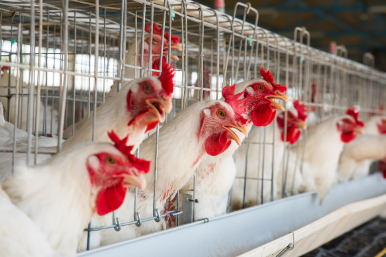

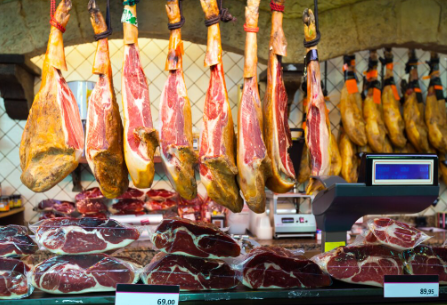
Little Gudiya learned in school textbooks that milk, eggs, and chicken are the best sources of protein. But she was shocked the day she first visited the local meat shop, she saw chickens and goats being brutally killed, and in the dairy, calves torn from their mothers’ side. Her heart ached, tears welled up in her eyes, and a heavy sadness settled in her young mind. She couldn’t understand how something so painful could be part of everyday food.

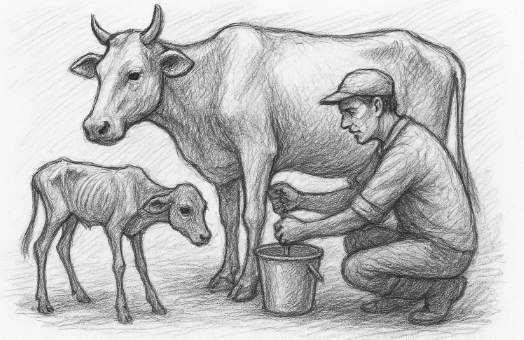
When Gudiya visited the dairy farm, she noticed that the process of milk production in the dairy industry is far from natural or nurturing. Cows produce milk only after giving birth, but their calves are often separated from them within hours to collect milk for human use. This separation causes immense emotional distress—both mother and calf cry for days, searching for each other. The mother’s body is repeatedly subjected to forced impregnation and milking cycles, leading to exhaustion, mastitis, and early death. The calf, denied its mother’s milk, is often undernourished or sold for veal. What appears as a glass of milk to us often hides a silent story of pain, loss, and exploitation.
Seeing Guidya in distress, her bua (father’s sister) gently introduced her to a vegan diet, explaining that she could grow strong, healthy, and full of energy entirely on plant-based foods—millets, pulses, soy, amaranth, and seeds—without harming any living creature. The fact that she could grow healthy without torturing any animal, without spreading violence, finally brought a smile on Gudiya’s face.


This blog is for every person struggling with emotional dilemma on how to get best protein diet without causing cruelty to animals.
What is a Vegan Diet?
A vegan diet excludes all animal-derived products, including:
- Meat (chicken, fish, beef, pork, etc.)
- Dairy (milk, cheese, butter, yogurt)
- Eggs
- Honey
- Any other animal-derived ingredients (like gelatin or certain additives)
Vegans rely entirely on plant-based foods like vegetables, fruits, legumes, grains, nuts, seeds, and plant-based dairy alternatives.
🧠 Understanding Protein — The Body’s Building Blocks
Protein is more than just a gym nutrient — it’s the foundation of life. Every muscle, enzyme, hormone, and even your immune cells depend on it. But not all proteins are created equal.
When we say “complete protein,” we mean it contains all 9 essential amino acids — the ones your body can’t make on its own. They must come from food daily — and ideally, in every meal. If even one of these is missing, your body cannot build or repair properly.
🌱 In Simple Words:
“If your meal is missing one amino acid, your body’s repair work pauses until it finds it.”
🧬 The 9 Essential Amino Acids
| Amino Acid | Main Role in Body | Vegetarian Food Sources |
|---|---|---|
| 1. Histidine | Helps in tissue repair, growth, and red blood cell formation; also makes histamine (immune & digestion). | Whole grains, lentils, sesame seeds, peanuts, soybeans, quinoa |
| 2. Isoleucine | Supports muscle repair, energy regulation, and immune function. | Oats, almonds, lentils, soy, pumpkin seeds, chickpeas |
| 3. Leucine | Key for muscle building, recovery, and blood sugar control. | Peas, soy, peanuts, lentils, mung beans, sunflower seeds |
| 4. Lysine | Important for collagen, hormones, and calcium absorption — often missing in grains. | Lentils, beans, chickpeas, quinoa, soy, amaranth, spirulina |
| 5. Methionine | Detoxification, hair & nail health, and synthesis of other amino acids. | Brazil nuts, sunflower seeds, sesame seeds, oats, millet, brown rice |
| 6. Phenylalanine | Needed for making dopamine and adrenaline — brain health & alertness. | Soy, peanuts, almonds, pumpkin seeds, cottage cheese, tofu |
| 7. Threonine | Helps form collagen, elastin, and maintain liver function. | Lentils, tofu, flax seeds, sesame seeds, quinoa |
| 8. Tryptophan | Converts into serotonin & melatonin — helps mood, sleep, and stress balance. | Pumpkin seeds, bananas, oats, peanuts, tofu, curd |
| 9. Valine | Muscle coordination, tissue repair, and energy. | Soy, peanuts, mushrooms, whole grains, sesame seeds |
🍳 Complete vs. Incomplete Protein
- Complete Proteins: Contain all 9 essential amino acids in adequate proportions.
🥚 Examples: Eggs, meat, fish, dairy, soy, quinoa. - Incomplete Proteins: Missing or low in one or more amino acids.
🌾 Examples: Millets, grains, lentils, nuts.
But here’s the secret — vegetarians can still get complete protein by combining the right foods together!
Most plant-based foods are called incomplete proteins because they lack one or more of the nine essential amino acids that the body cannot produce on its own. However, by combining different plant foods—like grains and legumes—you can easily create a complete protein profile for balanced nutrition.
🌱 The Power of Food Combining
Most plant foods have complementary amino acid profiles.
👉 For example, millets are low in lysine but high in methionine,
while lentils are low in methionine but rich in lysine.
So when you pair them — you get a complete amino acid profile, just like animal protein!
🌱 Top Plant-Based Complete Proteins
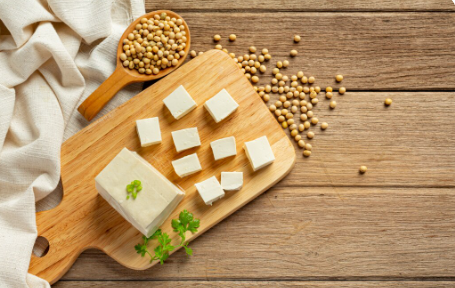
There are some rare plant sources with complete protein profile. Lets check them.

| Plant Source | PDCAAS | Protein per 100g (Cooked) | Notes |
|---|---|---|---|
| Soy (Tofu, Tempeh, Edamame) | 1.00 | 8–20g | Highest quality plant protein; includes all 9 essential amino acids. |
| Quinoa | 0.87–0.93 | 8g | Pseudocereal; contains all 9 essential amino acids in good balance. |
| Amaranth | 0.91 | 9g | Pseudocereal; often grouped with quinoa as a complete protein. |
| Buckwheat | 0.91 | 6g | Pseudocereal; considered a complete protein. |
| Hemp Seeds | 0.63–0.66 | 30g (3 tbsp) | Contains all 9 essential amino acids; good source of iron and magnesium. |
| Chia Seeds | 0.63–0.66 | 17g (3 tbsp) | Contains all 9 essential amino acids; high in omega-3 fatty acids. |
| Spirulina | 0.83 | 57g (1/4 cup) | Blue-green algae; contains all 9 essential amino acids; high in iron. |
🔍 Notes on PDCAAS and Protein Content
- PDCAAS is a method for evaluating protein quality by measuring the amino acid requirements of humans and their ability to digest it. A score of 1.00 is considered the highest quality.
- Protein content per 100g refers to the amount of protein available in 100 grams of the food after cooking or preparation.
📚 References
- Healthline’s article on Complete Protein Sources for Vegetarians and Vegans
- Medical News Today’s article on Plant-Based Complete Proteins
- Genesis Foods’ article on PDCAAS and Protein Digestibility of Foods
Cow Milk vs Soya Milk
Soy milk is generally a healthier and more sustainable choice than cow’s milk for most people. It provides comparable protein content, is naturally cholesterol-free, and contains healthy fats and fiber, unlike cow’s milk which has saturated fat and lactose that some people find difficult to digest. Soy milk also spares cows and calves from suffering, making it a cruelty-free and eco-friendly option with a lower carbon footprint. However, it’s best to choose unsweetened, calcium-fortified soy milk to match the nutrient profile of dairy while avoiding added sugars.
Here’s a nutrition comparison (per 1 cup / ~240 ml) between cow’s milk and unsweetened soy milk:
| Nutrient | Cow’s Milk (Whole) | Soy Milk (Unsweetened) |
|---|---|---|
| Calories | ~150 kcal | ~80–100 kcal |
| Protein | ~8 g | ~7–8 g |
| Fat | ~8 g (mostly saturated) | ~4 g (mostly unsaturated) |
| Carbohydrates | ~12 g (mainly lactose) | ~4 g |
| Cholesterol | ~24 mg | 0 mg |
| Calcium | ~300 mg (natural) | ~300 mg (if fortified) |
| Iron | ~0.1 mg | ~1–2 mg |
| Vitamin B12 | Present naturally | Added in fortified versions |
| Lactose | Present | None (lactose-free) |
| Environmental Impact | High (emissions, land, water use) | Low (eco-friendly, sustainable) |
✅ Verdict:
- Soy milk provides similar protein with less fat, fewer calories, and zero cholesterol, making it better for heart health and digestion.
- Cow’s milk has natural calcium and B12 but comes with saturated fat and animal cruelty concerns.
- For a balanced, ethical choice, fortified soy milk is the smarter and more sustainable option.
🗓️ 1-Week Complete Protein Plan (Vegetarian & Millet-Based)
🥗 Powered by Millets • Plant Proteins • Seeds • Legumes
In today’s fast-paced life, balancing protein on a vegetarian diet can be a challenge. But nature offers powerful plant-based sources when combined wisely. This 7-day millet-based meal plan uses a smart mix of millets, pulses, soy, and seeds to provide all 9 essential amino acids—making every day a complete protein day!
From foxtail to ragi, each millet is paired with complementary foods like moong dal, tofu, chia, and hemp seeds for full-spectrum nutrition.
Every meal includes ½ plate vegetables, ensuring fiber, antioxidants, and balance.
| Day | Theme | Meals & Key Components | Complete Protein Logic |
|---|---|---|---|
| Day 1 – Foxtail Millet & Moong Combo | Light start, high fiber | Breakfast: Foxtail millet porridge + chia seeds + soya milk Lunch: Foxtail millet khichdi (moong dal + veggies) Dinner: Foxtail millet roti + mixed dal curry + ½ plate sautéed veg | Millet (methionine) + Moong (lysine) + Seeds (tryptophan) = ✅ Complete protein |
| Day 2 – Kodo Millet & Soy Combo | High-protein Indian fusion | Breakfast: Kodo millet poha + peas + soya milk Lunch: Kodo millet pulao + tofu stir-fry + salad Dinner: Moong dal soup + Kodo millet salad + flax seeds | Millet (methionine) + Soy/Tofu (lysine, threonine) + Seeds → ✅ All 9 EAA |
| Day 3 – Little Millet & Chickpea Combo | Energy & satiety | Breakfast: Little millet idli + chutney + soya milk Lunch: Little millet biryani + chana masala + salad Dinner: Veg stew + little millet upma + flax seeds | Millet (methionine) + Chana (lysine) = ✅ Complete |
| Day 4 – Sorghum (Jowar) & Lentil Power | Gut-friendly, iron-rich | Breakfast: Jowar porridge + chia + nuts Lunch: Jowar roti + mixed dal curry + ½ plate veg Dinner: Jowar khichdi (moong + masoor) + soy curd | Jowar (methionine) + Lentils (lysine) = ✅ Full amino acid profile |
| Day 5 – Barnyard Millet & Lentil Combo | Light detox & low glycemic | Breakfast: Barnyard millet upma + flax + soya milk Lunch: Barnyard millet khichdi (moong dal + veggies) + watermelon seeds Dinner: Barnyard millet idli + urad dal + chia chutney + veg stir-fry | Millet (methionine) + Dal (lysine) + Seeds (threonine, tryptophan) = ✅ Complete protein |
| Day 6 – Amaranth & Soy Fusion | Calcium-rich, muscle recovery | Breakfast: Amaranth porridge + chia + banana Lunch: Amaranth roti + tofu bhurji + salad Dinner: Amaranth khichdi + moong dal soup + ½ plate veg | Amaranth itself is a complete protein (✅ all 9 EAA) + Soy boosts lysine |
| Day 7 – Ragi & Legume Combo | Calcium & fiber-dense finale | Breakfast: Ragi dosa + sambar (dal + veg) + chia chutney + soya milk Lunch: Ragi mudde + dal curry + seeds-topped veggies Dinner: Ragi roti + rajma curry + veg stir-fry + sunflower seeds | Ragi (methionine) + Dal/Rajma (lysine) + Seeds = ✅ Complete protein |
🌾 Amino Acid Profile of Common Seeds
| Seed Type | Rich In | Deficient In | Complete Protein? | Notes |
|---|---|---|---|---|
| Hemp Seeds | All 9 essential amino acids | None (balanced) | ✅ Yes | One of the few complete seed proteins |
| Chia Seeds | Lysine, Methionine | Slightly low in Leucine | ✅ Almost | Considered functionally complete |
| Flax Seeds | Methionine, Cysteine | Lysine | ❌ No | Pair with legumes or lentils |
| Pumpkin Seeds | Lysine, Tryptophan | Methionine | ❌ No | Combine with grains or millets |
| Sesame Seeds | Methionine | Lysine | ❌ No | Perfect to pair with millets or lentils |
| Sunflower Seeds | Methionine | Lysine | ❌ No | Add with beans or pulses for balance |
| Watermelon Seeds | Arginine, Tryptophan | Lysine | ❌ No | Good protein booster, but not complete |
| Poppy Seeds (Khus Khus) | Methionine | Lysine | ❌ No | Complement with legumes for balance |
🧠 Key Takeaway
- Hemp seeds are the only truly complete seed protein.
- Chia come very close.
- Other seeds (pumpkin, sesame, sunflower, flax) are excellent protein sources but lack lysine, so they should be paired with legumes, lentils, or millets that are rich in lysine.
✅ Smart Combinations
- Millet + Sesame Seeds → balances methionine and lysine
- Lentils + Flax Seeds → complete amino profile
- Tofu + Pumpkin Seeds → high-protein, lysine-rich combo
🌾 Best Combinations (Millet + Seed) for Complete Protein
| Millet Base | Best Seed Partner (Indian Option) | Complementary Amino Acid |
|---|---|---|
| Ragi / Jowar | Pumpkin or Sunflower seeds | Lysine, Tryptophan |
| Foxtail / Kodo | Flax or Sesame seeds | Threonine, Methionine |
| Barnyard / Little Millet | Chia or Watermelon seeds | Tryptophan, Valine |
| Amaranth | Any seed (optional) | Already complete protein |
🌿 Weekly Highlights
✅ All 9 essential amino acids covered daily
🥗 ½ plate vegetables at every major meal
🫘 Legume or soy source in every millet base
🌾 Millet rotation ensures varied nutrients (iron, calcium, magnesium)
🌻 Seeds (chia, watermelon, flax, pumpkin) add omega-3s & threonine
🥛 Soya milk replaces dairy — 100% plant-based and lactose-free
💪 Nutritional Balance per Day (Approx.)
| Nutrient | Target (Average) |
|---|---|
| Protein | 55–65 g |
| Fiber | 25–30 g |
| Healthy Fats (Omega-3) | 6–8 g |
| Calcium | 600–800 mg |
| Iron | 12–15 mg |
| Energy | 1600–1900 kcal |
🌟 Why It Works
Each millet brings a unique amino acid profile — when paired with pulses, soy, or seeds, they complement one another to build complete proteins similar in quality to those found in animal foods.
This plan supports:
- Muscle strength & recovery 💪
- Hormonal balance 🌼
- Better satiety & digestion 🌱
- Sustainable vegetarian protein sourcing 🌎
🇮🇳 Indian Seeds Nutrition & Combination Chart
🌾 Enhancing Millets, Pulses & Grains for Complete Proteins
| Seed Name (Indian) | Major Nutrients (per 100 g) | Best Combination (Millet/Grain/Pulse) | Nutritional Role / Benefit | Complete Protein Role |
|---|---|---|---|---|
| Flax Seeds (Alsi) | Protein: 18 g Omega-3 (ALA): High Fiber: Very high Calcium: 250 mg | Combine with Foxtail / Kodo Millet, or sprinkle on Moong Dal Khichdi | Improves heart health, digestion, hormonal balance | Adds tryptophan, threonine missing in cereals |
| Chia Seeds | Protein: 17 g Omega-3: High Calcium: 630 mg Iron: 7 mg | Mix in Ragi porridge, Soya milk smoothies, or Millet Dosa chutney | Boosts calcium, hydration, and sustained energy | Provides tryptophan, methionine, valine |
| Pumpkin Seeds (Kaddu ke Beej) | Protein: 28–30 g Iron: 8 mg Magnesium: 600 mg Zinc: 7 mg | Sprinkle on Ragi roti, Rajma curry, or Little Millet salad | Builds immunity, improves muscle repair | Adds lysine, tryptophan for protein completion |
| Sunflower Seeds | Protein: 20–22 g Vitamin E: High Iron: 5 mg Folate: 227 mcg | Add to Kodo millet pulao or Tofu stir-fry | Supports skin health, reduces inflammation | Complements millet methionine deficit |
| Sesame Seeds (Til) | Protein: 18 g Calcium: 975 mg Iron: 14 mg Healthy fats: High | Pair with Jowar or Ragi in rotis, laddoos, or chutney | Strengthens bones, boosts iron levels | Rich in methionine, balances lentil-based meals |
| Watermelon Seeds (Tarbooz ke Beej) | Protein: 28–30 g Magnesium: 500 mg Iron: 8 mg Healthy fats: Moderate | Add to Millet upma, Moong dal salad, or Chia smoothie | Aids energy metabolism, affordable protein | Supplies arginine & lysine, enhancing pulse balance |
| Groundnuts (Peanuts / Moongphali) | Protein: 25–26 g Niacin: High Magnesium: 168 mg Folate: 240 mcg | Mix with Foxtail Millet poha or Sprout salad | Improves brain function, protein absorption | Adds lysine, complements methionine-rich millets |
| Lotus Seeds (Makhana) | Protein: 10 g Calcium: 60 mg Fiber: 14 g Low fat | Add to Amaranth porridge or Moong soup | Great for snacking, gluten-free protein | Balances amaranth & lentil meals |
| Fenugreek Seeds (Methi) | Protein: 23 g Iron: 33 mg Fiber: 25 g | Use in Khichdi tadka or Millet dosa batter | Supports digestion & blood sugar balance | Adds tryptophan & threonine, minor protein booster |
🌿 How Seeds Help Build Complete Proteins
- 🌾 Millets & grains are rich in methionine but lack lysine.
- 🫘 Legumes & pulses (dal, chana, soy) are rich in lysine but low in methionine.
- 🌻 Seeds & nuts fill the remaining amino acid gaps (tryptophan, threonine, valine), completing the amino acid profile.
Hence, a meal like:
Ragi Roti + Moong Dal + Pumpkin Seeds Topping = Complete Protein Meal ✅
🔗 References
- National Institute of Nutrition – Millets for Health
- Harvard School of Public Health – Protein & Amino Acids
- FAO – The Nutritional Role of Millets
💬 Final Thought
You don’t need fancy powders or imported protein bars to stay fit. We don’t need to kill animals to stay fit.
A simple combination of millets, lentils, dairy, and seeds can give you all the protein your body needs — naturally, locally, and sustainably.
In the world of fast food and shortcuts, complete protein is about smart tradition — not supplements, not animal cruelty.
Moved by Gudiya’s insistence and heartfelt request, the entire joint family gradually embraced a vegan lifestyle, discovering that ethical, plant-based nutrition could be delicious, complete, and highly beneficial.
Call to Action
Choose plant-based proteins and transform your meals into a source of positive energy. Every animal killed in fear and suffering carries that pain—consuming it can subtly affect your mind and body. By switching to compassionate, plant-based foods, you nourish yourself with life, peace, and love, while reducing animal cruelty and embracing a higher vibration of living.
Read blogs on holistic health here.