


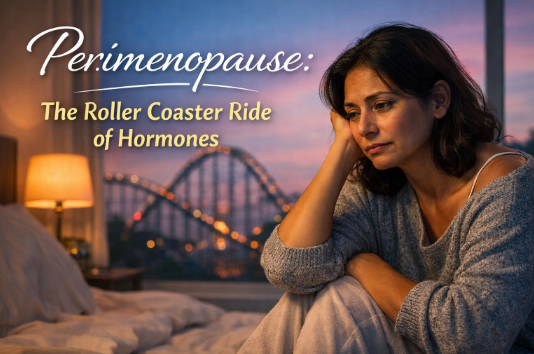
When You Feel Different but Can’t Explain Why
One day, you wake up and realize something has changed.
You are still you — responsible, caring, capable — but your body doesn’t respond the way it used to. Sleep feels lighter. Energy feels fragile. Emotions feel closer to the surface. Small stresses feel heavier. Weight shifts despite unchanged habits. Your eyes burn after screen time. Your joints ache when you get up in the morning. Anxiety appears without invitation.
And the most painful part?
No one warned you this would happen.
You start wondering:
“Is this stress?”
“Is this aging?”
“Why can everyone else manage but I can’t?”
What you are experiencing may have a name — perimenopause.
Not a disease. Not a weakness.
A transition.
Table of Contents
What Is Perimenopause?
Perimenopause means “around menopause.” It is the long, often confusing phase before menopause, when the ovaries slowly begin to change how they produce hormones.
Menopause is diagnosed only after 12 months without periods. But perimenopause can begin 7–10 years before that, sometimes as early as the mid‑30s, most commonly in the late 30s or 40s.
This is where many women feel lost.
Periods may still be regular. Life looks normal on the outside. But internally, hormones begin behaving unpredictably — not declining gently, but fluctuating sharply.
Estrogen rises high one month and crashes the next.
Progesterone, the calming hormone, quietly drops earlier.
The nervous system struggles to keep up.
Your body starts speaking a new language — one you were never taught.
Why Perimenopause Feels So Overwhelming
Perimenopause does not arrive in isolation.
It often overlaps with:
- Peak career responsibilities
- Parenting teenagers
- Caring for aging parents
- Emotional and financial pressure
- Years of neglecting your own needs
Women are expected to carry on — emotionally steady, endlessly capable, always giving.
So when perimenopause disrupts this image, women don’t ask for help.
They blame themselves.
And that self‑blame hurts more than the symptoms themselves.
The Symptoms: More Than Just Hot Flashes
Perimenopause symptoms are diverse because estrogen receptors exist throughout the body — brain, eyes, skin, joints, gut, heart, bladder.


Emotional & Mental Symptoms
- Anxiety or panic attacks (often first time in life)
- Mood swings
- Irritability or sudden anger
- Emotional numbness or sadness
- Reduced stress tolerance
Sleep & Energy Issues
- Difficulty falling asleep
- Early morning waking
- Night sweats
- Non‑restorative sleep
- Constant fatigue




Cognitive Changes
- Brain fog
- Forgetfulness
- Difficulty concentrating
- Reduced multitasking ability
Physical Changes
- Weight gain (especially around the abdomen)
- Joint and muscle pain
- Headaches or migraines
- Palpitations
- Hair thinning and hair fall
- Dry skin and pigmentation



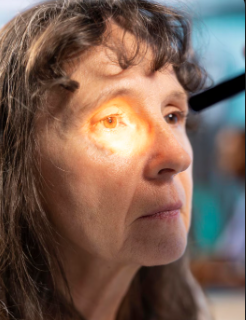
Eye, Gut & Intimate Health
- Dry, burning eyes
- Difficulty with near vision
- Bloating or constipation
- Vaginal dryness
- Reduced libido
Every symptom feels personal — but none are imaginary.
The Science Behind the Chaos (In Simple Words)
Estrogen: The Master Regulator
Estrogen supports:
- Brain chemistry (serotonin, dopamine)
- Sleep and mood
- Eye lubrication and vision
- Skin collagen
- Joint lubrication
- Bone density
- Heart and blood vessel health
In perimenopause, estrogen does not simply decline — it fluctuates.
These fluctuations confuse the brain and nervous system, creating emotional and physical instability.
Progesterone: The Lost Calmer
Progesterone supports:
- Deep sleep
- Anxiety control
- Emotional balance
It often declines earlier than estrogen because ovulation becomes irregular.
This is why many women experience anxiety and insomnia before periods change.
Stress Hormones Join the Story
As ovarian hormones fluctuate, the adrenal glands compensate.
Chronic stress amplifies symptoms dramatically — worsening sleep, weight gain, mood swings, and fatigue.
Why Every Organ Feels Different
Estrogen is present everywhere — so when it fluctuates, every system responds.
Brain & Nervous System
- Mood swings, anxiety, brain fog
Eyes
- Reduced tear production causes dryness and burning
- Lens stiffness worsens near vision
Skin & Hair
- Reduced collagen causes dryness, wrinkles, pigmentation
- Hair growth cycle shortens → hair fall
Joints & Muscles
- Loss of estrogen increases inflammation
- Stiffness and aches increase
Gut
- Slower digestion
- Increased bloating and sensitivity
Bladder & Vaginal Tissue
- Thinning tissues cause dryness and discomfort
This is whole‑body transition, not random breakdown.
The Emotional Cost of Not Knowing
When women don’t understand perimenopause:
- They hate their bodies
- They suppress symptoms
- They push through exhaustion
- They accept suffering as normal
Awareness changes everything.
When women understand why, they stop blaming themselves.
Lifestyle & Self‑Care: Supporting a Changing Body
Perimenopause is not the phase to fight your body.
It is the phase to support it differently.
Diet for Perimenopause: Nourishment Over Restriction
Why Diet Matters More Now
- Insulin sensitivity reduces
- Muscle loss begins
- Bone density starts declining
Insulin sensitivity reduces means your body’s cells respond less effectively to insulin, making it harder to control blood sugar and increasing the risk of weight gain and energy crashes.

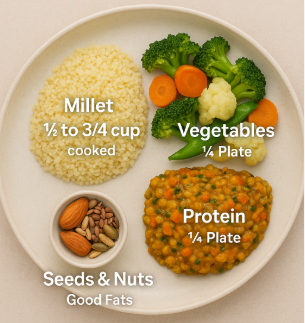
Key Principles
- Protein at every meal (20–30 g)
- Healthy fats for hormone support
- Fiber for gut and estrogen balance
- Reduce sugar, caffeine, alcohol
Food is not about control anymore — it is about stability.
Exercise for Perimenopause: Strength Without Stress


Strength Training (2–3 times/week)
Protects bones, muscles, metabolism
Includes:
- Squats, lunges, push‑ups
- Resistance band exercises
- Light weights
Walking (Daily)
- Lowers cortisol
- Improves mood and insulin sensitivity




Yoga, Stretching & Mobility
- Reduces stiffness
- Calms nervous system
Avoid extreme cardio and overtraining — they worsen symptoms.
Lifestyle That Heals Hormones
Sleep Is Non‑Negotiable
- Fixed routine
- Cool, dark bedroom
- No screens before bed
Stress Regulation
- Breathwork
- Meditation
- Nature exposure
Emotional Boundaries
- Say no without guilt
- Ask for help
- Reduce people‑pleasing
Rest is medicine in this phase.
Medical Support Is Not Failure
Options may include:
- Hormonal therapy (when appropriate)
- Vaginal estrogen for dryness
- Non‑hormonal symptom support
Quality of life matters.
A Message to Every Woman Reading This
If you feel different — you are not imagining it.
If you feel overwhelmed — your body is communicating, not betraying you.
If you feel lost — this is transition, not decline.
Perimenopause is the roller coaster ride of hormones.
But with awareness, self‑care, and compassion, you don’t have to ride it blindfolded.
You deserve understanding.
You deserve support.
You deserve kindness — especially from yourself.
Read more blogs here.
External Reading – 🔗 Perimenopause – Symptoms and Causes | Mayo Clinic — A trusted medical overview of perimenopause symptoms, why they occur, and what to expect from this transitional phase. Mayo Clinic